

Professor Ellen Beate Hansen Sandseter at Queen Maud University of Early Childhood Education, (DMMH) is leading the ViRMa project (Virtual Risk Management – exploring effects of childhood risk experiences through innovative methods).
One of the key findings from researchers at DMMH and the University of British Columbia (UBC) suggests that parents have a good reason to let their children climb a little higher or roam a little further.
Children who take more risks in play make safer decisions more quickly when crossing a busy road
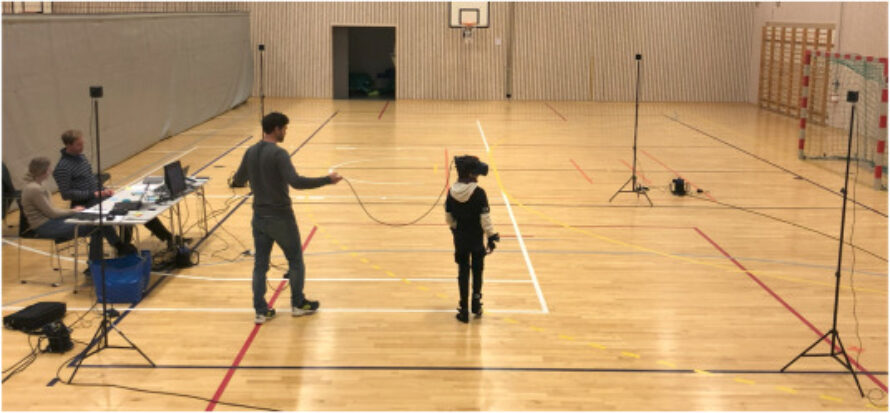
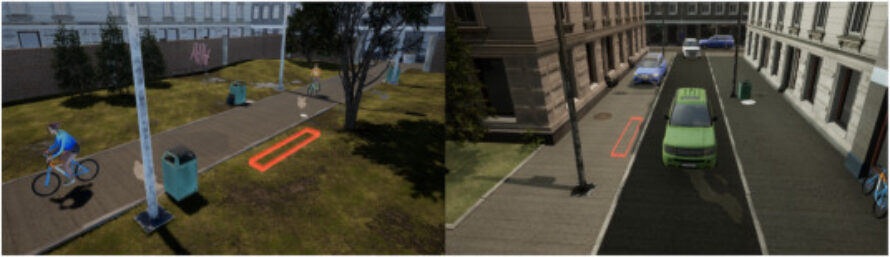
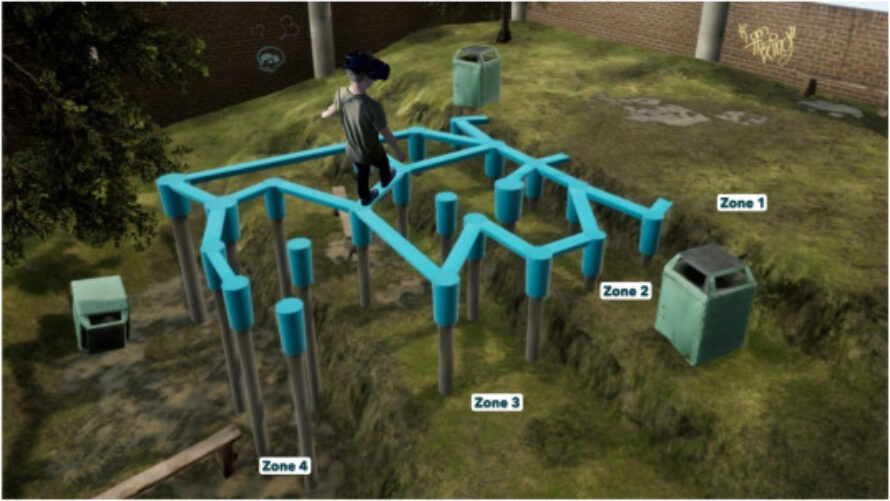
The study put 424 children aged 7 to 11 from Norway and Canada through two virtual-reality tasks- essentially video game-style simulations they experienced through a headset while moving around a real gym. In one, children explored a virtual balancing structure with different height levels. In the other, they had to decide when it was safe to cross a street with oncoming traffic. The researchers tracked how willing each child was to take risks during play, then looked at how those same children performed when the ‘stakes’ were higher.
What they found challenges the common assumption that it’s reckless to let children take risks. Kids who were bolder in the playground task - moving faster, spending more time on the higher sections, venturing onto tricky pillars - were also quicker and more efficient at deciding when to cross the street. They didn't make more dangerous choices, they were just faster at reading the situation and acting on it.
Why risky play matters
Professor Sandseter has researched risky play for many years and has found that this type of play supports children’s development.
- Keeping children safe means allowing them to take risks, says Dr. Mariana Brussoni, professor at UBC.
- Risky play is a fundamental way in which children learn about the world, about themselves, and about how to stay safe in different situations.
For decades, parents, schools, and authorities have tried to make childhood safer by removing risks. However, if children never get to practice assessing and managing small, manageable dangers, they may not develop the judgment needed in more complex situations. The study suggests that both the playground design and the level of freedom children are given can influence their ability to navigate a complex world, long after they have left the playground.
A tale of two playgrounds
Norwegian children in the study showed a significantly greater willingness to take risks than Canadian children. In Norway, outdoor life and children’s independence are integrated into the national education policy, and Norwegian parents and teachers are generally more comfortable with physical risk than in many other countries. Canada, by contrast, tends toward more restricted, supervised childhoods.
Testing the hypothesis safely
The VR technology that was crucial for the study was developed as part of the ViRMa project, led by Professor Sandseter at Queen Maud University of Early Childhood Education.
In the project proposal, the researchers emphasised that it was not possible to test children’s behavior in real traffic.
- I don’t think there is an ethics committee in the world that would allow us to send children out into traffic to see how they manage, says Dr. Brussoni.
Before this technology became available the researchers weren`t able to test their hypothesis properly. With the help of VR, they could now observe how children behaved in a virtual street environment, allowing them to collect behavioral data safely. An impressive 85 per cent of the children said the VR environments felt realistic to them.
The children who took the most risks in play also fell more often in the virtual playground, highlighting the point: falling, stumbling, and trying again teaches children what they're capable of, where the limits are, and how to adjust. Those lessons, the researchers argue, carry over into a variety of situations.
How can we support children’s risk management?
- The study shows that play is an arena where children learn to assess and manage risk, even through failure, and that this supports the development of risk management in situations outside of play, such as in traffic, says Sandseter.
For parents and those who work with children, it is important to recognise that children need time, space, and freedom to play - and to fail - in order to develop and build mastery.
The researchers emphasise that adults who are working with children or spending time with them, must create a shared understanding of the importance of risky play and children’s independent mobility. Thus ensuring that natural and creative play areas are “as safe as necessary,” rather than “as safe as possible.”
The study was published earlier this month in Journal of Environmental Psychology.