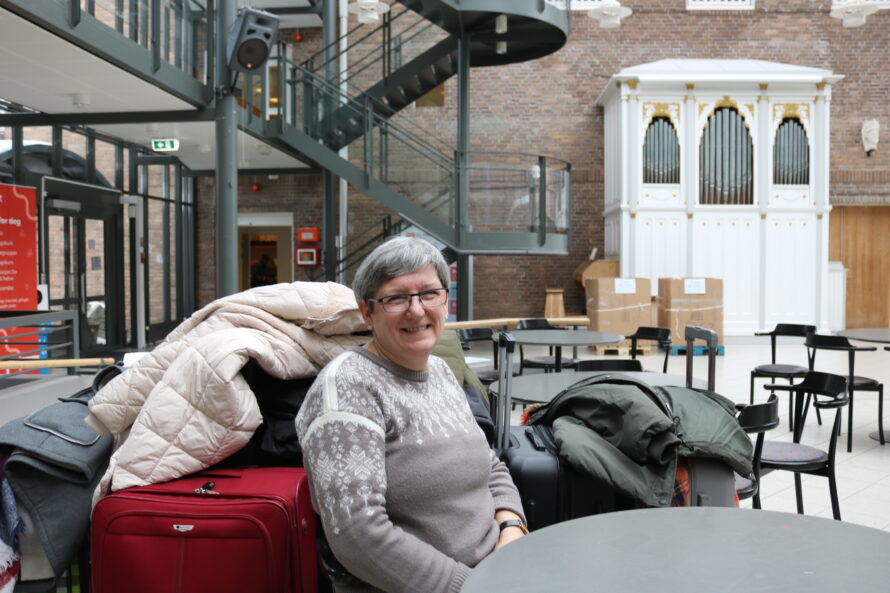

- Outdoor activities are important for the development of motor skills, independence and a sense of balance, says Annette Kessler from Elisabeth Selbert Schule in Hameln.
She makes a great effort to spread this knowledge to German kindergartens.
- I think it is important that kindergarten teachers look get inspiration from other places as well, says Kessler.
- Norwegian and German kindergartens have a very different pedagogical view of risky play.
Kessler is employed at Elisabeth Selbert Schule in Hameln. Through a Norwegian course, she came across the collection of articles "Out all day", with Assistant professor Olav Bjarne Lysklett as editor. The one conversation turned into several and Kessler spent 8 weeks at DMMH in 2015. With Lysklett as her mentor, she met many exciting people, kindergartens and topics, and became familiar with Professor Ellen Beate Hansen Sandseter's research on risky play.
- When it rains or snows and ices in Germany, many employees don't want to take their children outside. Everyone is a little afraid that their children will hurt themselves. Parents get irritated if their children get bruises. There is also no culture for being outside before 11 am.
Visits many kindergartens
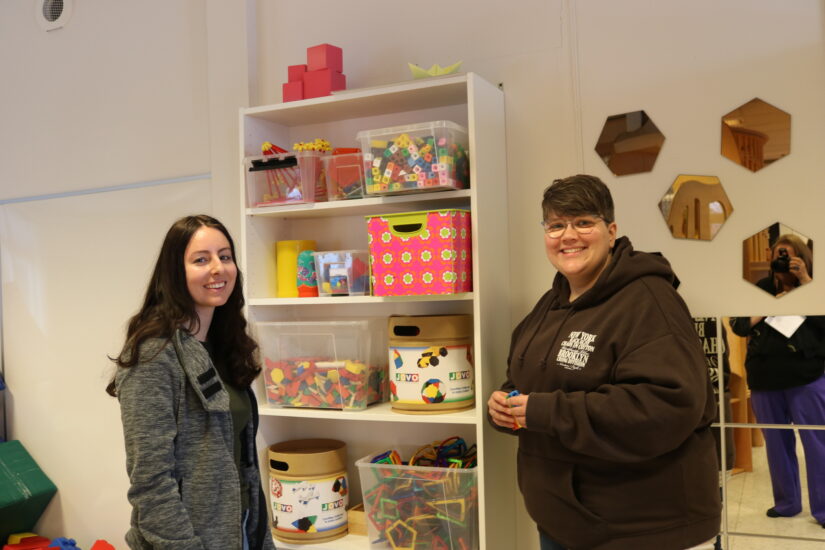
Kessler also came into contact with her compatriote Oliver Thiel who works at a mathematics professor at DMMH. He introduced her to the Mathematics Room at the university college. Here the teachers have become motivated to try new things in the kindergartens.
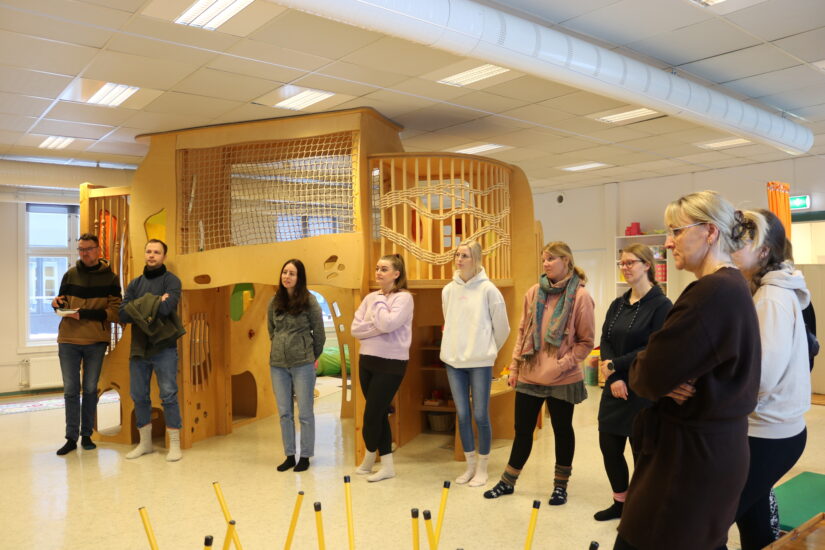
Through the Erasmus scheme, well over 100 kindergartenstaff from more than 60 kindergartens have joined Kessler at DMMH. They have also visited many local kindergartens, especially outdoor kindergartens. Here they have received good examples of both outdoor play and ways of working with mathematics that motivate the children. They have also received tips on ergonomic furniture and the prevention of occupational injuries, been invited into kindergartens with a large diversity group and talked to both employees and parents.